

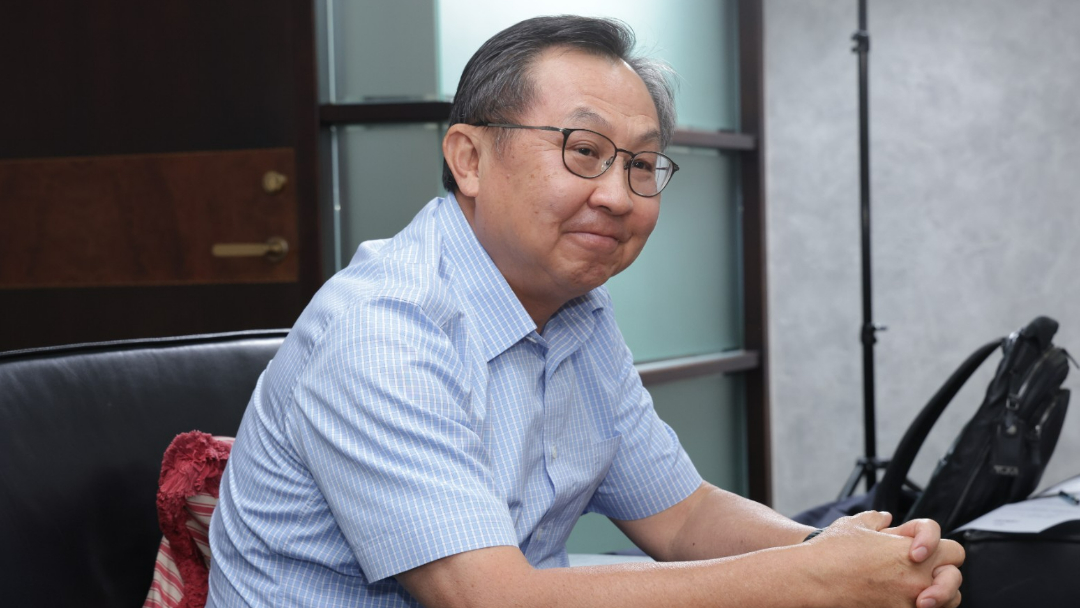
Shen Shang-hung, Chairman of Taya Group. (Photo by Liao Jui-hsiang)
While acknowledging the necessity of obtaining a "social license" for power infrastructure, Taya Group Chairman Shen Shang-hung posed a critical question: What should developers and the government do when communication reaches a complete deadlock? Economic development relies heavily on power; is "giving up" the only remaining path?
Shen stated bluntly that in a democratic era—and under the pressure of securing votes—power projects usually come to a standstill when faced with an "absolute no" from the public. He noted that neither the government nor the industry will "force their way through"; typically, the social opposition wins.
The most classic case is Taipower’s Songhu Substation. Originally a key component of the Sixth Transmission and Transformation Project, it was delayed for 20 years due to local protests. Construction only moved forward after the realization hit that "power exists, but it cannot be delivered." The public eventually recognized that Taipower, in its bid for a social license, had long ago researched ways to move the substation underground and indoors to shield electromagnetic waves and protect health. Yet, due to a minority of dissenters, the project remained stuck in a "binary tug-of-war" for two decades.
This inevitably raises questions: Was the 20-year opposition to the Songhu Substation truly for the "public interest" or "private interest"? Could some have been waving the banner of public concern—citing fears over radiation and health—while actually focusing on private gains, such as real estate development?
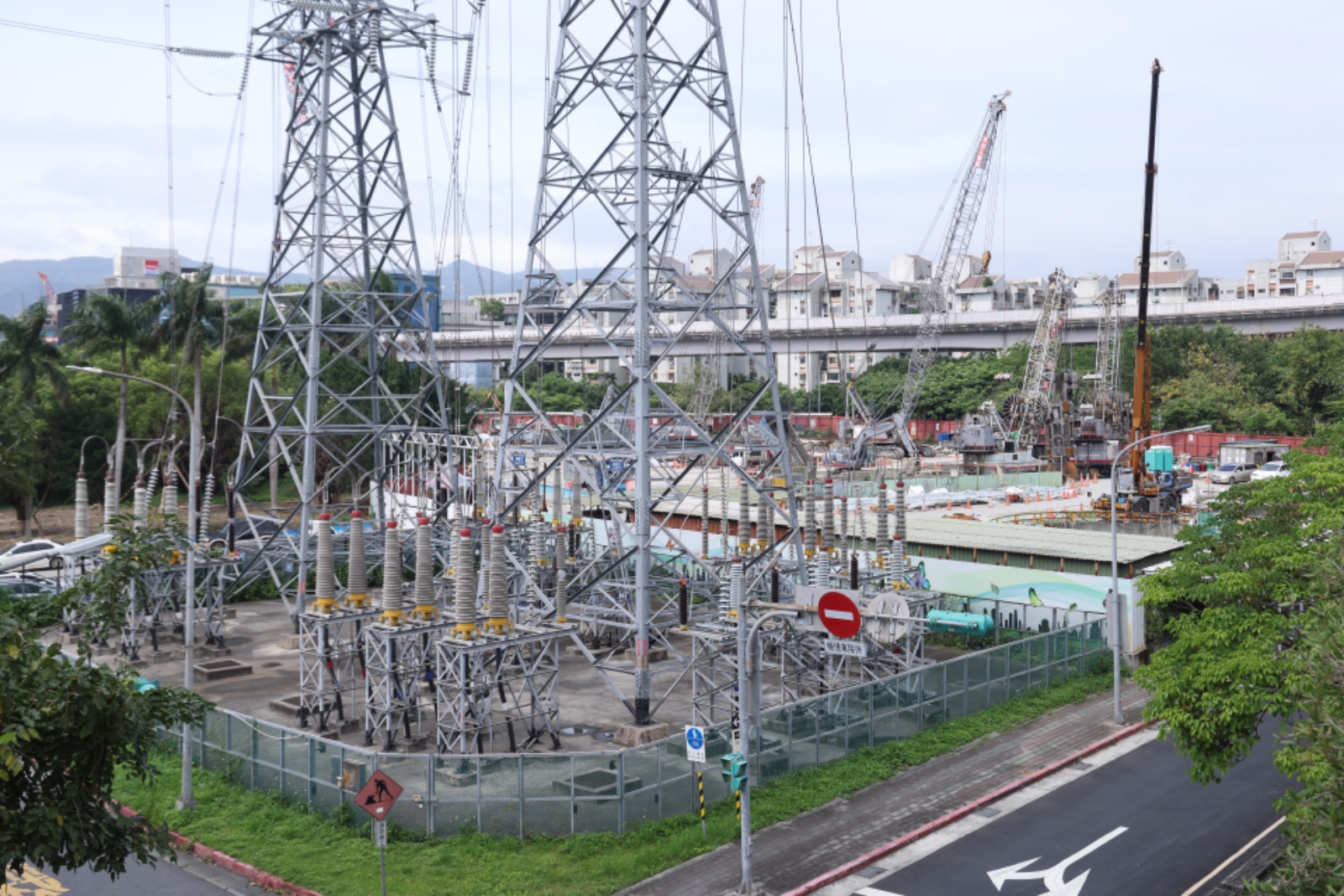
The construction site of the Songhu Extra-High Voltage Substation. Construction finally proceeded after a 20-year delay caused by local protests, once it was realized that "power exists, but it cannot be delivered." (Photo by Chen Pin-yu)
Using the turbulent history of the Songhu Substation as a case study, Shen Shang-hung raised an issue for public reflection: What should the government and industry do if opposition to a substation is driven merely by the "private interests" of a few? How can we determine whether an objection is a matter of genuine public concern or simply a minority issue?
Shen urged that since most developers initiate green energy and energy storage investments under the premise of legal compliance, the government must establish a mechanism to intervene when "social issues" reach an absolute deadlock. Such a mechanism should evaluate whether the opposition stems from the "private interests" of a few or the "public interest" of the majority.
Taking the Songhu Substation again as an example, Shen questioned whether a local referendum or a formal factual investigation should have been conducted in the Neihu district during those 20 years of delay. Furthermore, he noted that in the business world, contract disputes can be resolved through arbitration or litigation—perhaps similar channels could be applied here.
Shen stated that through such methods, developers could reach an "actionable result."Even if the verdict is a definitive"No, you cannot proceed," it provides a clear-cut conclusion. Currently, the lack of such a mechanism leaves developers with only one choice: "withdraw and abandon." Giving up on all prior investment is detrimental to the advancement of power infrastructure.
In short, Shen advocates that while developers must obtain both legal and social "licenses" for power development, the requirement for a "social license" should not be without limits. If a social license cannot be secured, the government should provide a mechanism to assist developers. The options should not be limited to just "giving up" or "forcing the project through"—the latter of which is clearly impossible for private companies. But besides giving up, is there really no other solution? For the economy to move forward, power is an absolute necessity.
In response, Chen Ching-sheng, head of the Electricity Division of the Energy Administration, stated that because referendums are government-held, using them to decide the fate of private investments might be inappropriate. While he empathized with the fact that Taipower and private power plants often face local resistance, he maintained that the best solution remains for developers to communicate extensively with local residents beforehand, fostering a relationship of "neighborly harmony and mutual prosperity."
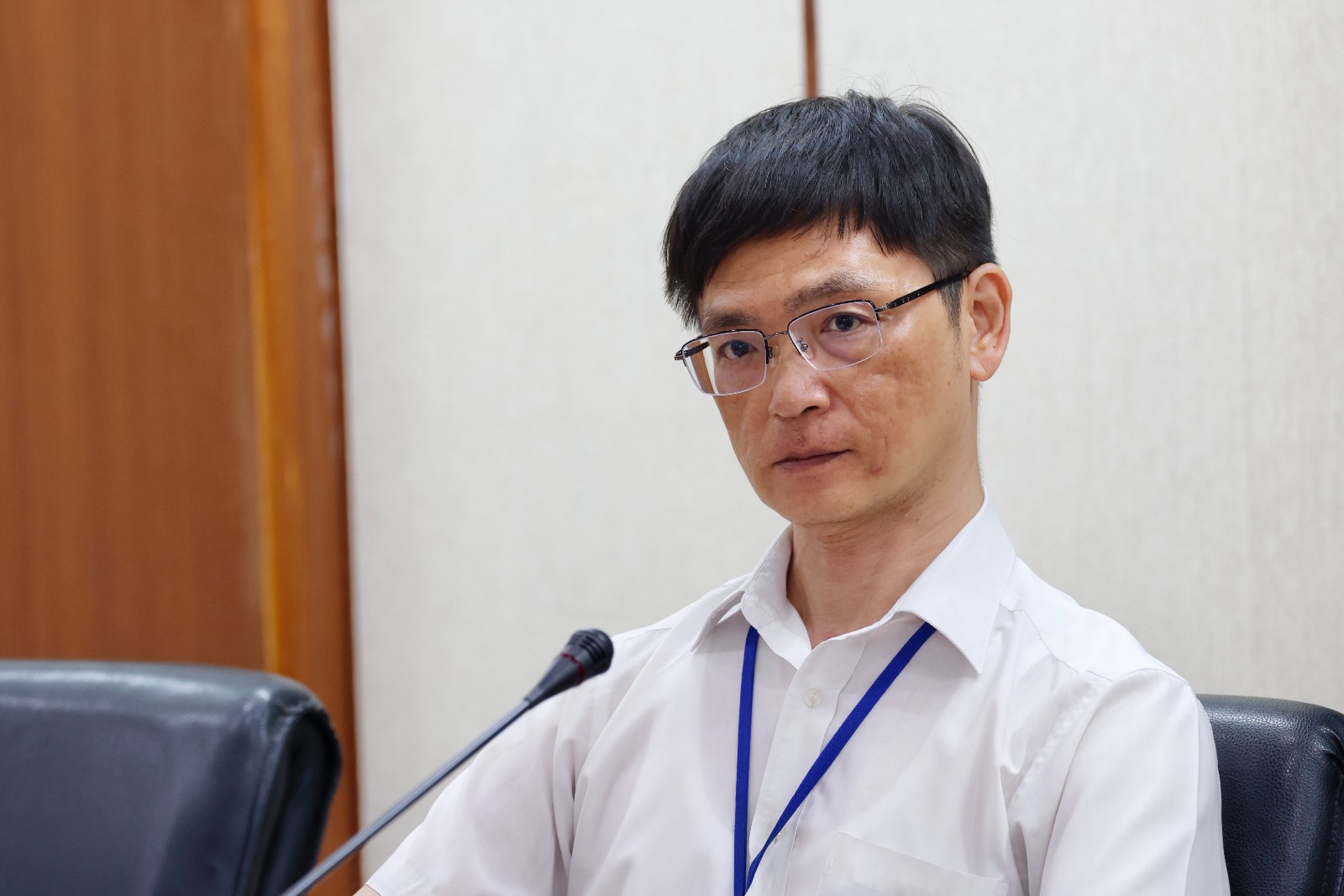
Chen Ching-sheng, head of the Electricity Division of the Energy Administration, stated that because power development projects frequently encounter local resistance, developers must engage in more extensive communication with residents beforehand. (Photo by Liao Jui-hsiang)
Source: Tai Sounds